
 |
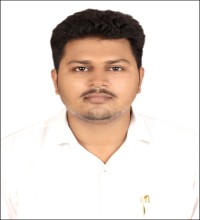
Dr Roushan Singh |
| Designation-Fellow | |
| Email- roushansingh03@gmail.com | |
| EPBAX- | |
| Duration of Fellowship | 24 August 2026 to 23 August 2027 |
| Research Project | वाक् तत्त्व के तंत्रागमीय संदर्भ |
| About:
Dr. Roushan Singh is a Fellow at the Indian Institute of Advanced Study (IIAS), Rashtrapati Nivas, Shimla, where he is undertaking research on “वाक् तत्त्व के तंत्रागमीय संदर्भ” (Vāk Tattva in the Tantric and Āgamic Traditions). His research broadly focuses on Indian Philosophy of Language, with particular emphasis on the philosophical dimensions of Vāk, Śabda, Sphoṭa, Śabdārtha, and the relationship between language, consciousness, knowledge, and reality in Indian philosophical traditions. Dr. Singh holds a Ph.D. in Philosophy from Mahatma Gandhi Antarrashtriya Hindi Vishwavidyalaya, Wardha, where his doctoral research examined “भारतीय भाषा-दर्शन के मूलतत्त्वों का विवेचन”. He has also pursued Postdoctoral (PDF) Research at the School of Sanskrit and Indic Studies, Jawaharlal Nehru University (JNU), New Delhi). His academic interests encompass Indian theories of meaning and language, particularly the contributions of Nyāya, Mīmāṃsā, Vyākaraṇa, Jain, buddha, philosophy, Advaita Vedānta, and Kashmir Śaivism. His current research at IIAS examines Vāk Tattva in the Tantric and Āgamic traditions, particularly its conceptual development in Kashmir Śaivism and the Trika tradition. Dr. Singh has published research articles in various academic journals and has presented research papers at several national and international academic conferences and seminars, including the Indian Philosophical Congress, the International Congress of Vedanta, and academic programmes organized by institutions such as Banaras Hindu University, Jawaharlal Nehru University, University of Lucknow, Magadh University, Central Sanskrit University, and other academic institutions. Through his research, Dr. Singh seeks to contribute to a deeper understanding of India’s philosophical traditions of language and consciousness, while bringing classical Indian theories into constructive dialogue with contemporary philosophical questions concerning meaning, cognition, language, reality, and human consciousness. ***** |
|