
|
|
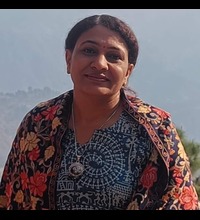
Dr. Sumsehta Sheoran |
| Designation-Fellow | |
| Email- sumee.aonu@gmail.com | |
| EPBAX- | |
| Duration of Fellowship | 01 September 2026 to 31 August 2027 |
| Research Project | Marwar (Jodhpur) Mein Lok Swasthya Evam Paramparik Chikitsa Pranali, Unnisvin-Beesvin Shatabdi |
| About:
Dr. Sumeshta holds Ph.D., M.Phil., and M.A. in History from Maharaja Ganga Singh University, Bikaner. She is a JRF holder of Indian Council of Historical Research in History. Her Doctoral thesis, Paschimi Rajputana Mein Parchlit Samajik Kuritiyan Tatha Unmulan Hetu Rajkiya va Arajkiya Paryason Kaa Vishleshanatamak Adhyayan, 1800-1950 AD, examined the prevalent social abuses in Rajasthan during the Fudo-Colonial era and the Governmental and Non-Governmental efforts for eradication. With over ten years of teaching and research supervision experience at Ph.D. levels, she has developed an interdisciplinary research profile spanning Indian Knowledge Systems (IKS), Social & Cultural Studies and Freedom Struggle of India. She has thirteen years of research experience working as Research Assistant in Government Research Institute like Haryana Academy of History and Culture (Govt. of Haryana), Gurgaon; Prime Ministers Museum & Library (PMML) earlier Nehru Memorial Museum & Library (NMML), Ministry of Culture, Government of India, New Delhi. Also, Dr. Sumeshta has worked as Project Director in the ICHR, Ministry of Education, Govt. of India for two years and completed the project in the record time. She was Post Doctoral Fellow of Indian Council of Social Sciences Research (ICSSR), Ministry of Education, Govt. of India from 2022-2024 and worked on State, Society and Water: Management and Utilization - With Special Reference to Marwar-Jodhpur. While working on this project she has given particular emphasis to the traditional water-harvesting techniques prevalent in Marwar and has examined their significance from the perspective of public welfare and local resource management. The study provides a detailed account of the various types of water bodies—such as tanks, wells, stepwells, ponds and other traditional structures—constructed under the patronage of the rulers of Marwar, as well as by the Ranis and Maharanis of the royal family. These initiatives were not merely acts of royal charity or religious merit; they constituted an important response to the region’s arid climate, recurrent water scarcity and the everyday needs of the population. The research also explores the social and economic factors that encouraged the construction and maintenance of such water bodies, including the provision of drinking water, support to agriculture and livestock, facilitation of settlement and trade, and the welfare of local communities. By examining these structures as part of a broader system of community-oriented resource management, the study highlights the important role played by the ruling elite and members of the royal household in developing and sustaining traditional water infrastructure in Marwar. Peer Reviewed Publications: She has to her credit several peer reviewed publications which are listed below: § 'Rajasthan ke Paramparagat Jal-Prabandhan mein Mahilaon ka Yogdan Jodhpur ke Vishesh Sandrbh mein', Itihaas Shodh Patrika, Indian Council of Historical Research, New Delhi, Ank bhag, July-December 2023. § 'Arya Samaj, Jati Sabhayen, kavi, Geetkar, Patr-patrikayen tatha Samaj Sudhar (19vin evam 20vin Sadi ka Rajasthan)', Itihas Shodh Patrika (Visheshank), Anupurk Ank - 8, Indian Council of Historical Research, New Delhi, 2022 § ‘Prayavaran itihas lekhan: Jal ke vishesh Sandarbh mein’, Proceedings of Rajasthan History Congress, Volume 36, Jodhpur, 2022 § 'Samajik Itihaas Lekhan evam iske Strot Samantiya-Aupniveshik Paschimi Rajasthan ke Sandrbh Mein' (Best paper award received), Proceedings of Rajasthan History Congress, Volume 31, Jodhpur, 2016.
Books/Chapters/Articles etc: Apart from the peer reviewed Dr. Sumeshta several other articles published in Rajasthan History Congress Proceedings and chapters in edited books. She has two published two books as well which are given below: § Sumeshta, Samantiya Aupniveshik kaal mein Striyon ki Samajik Stithi, Khama Publishers, New Delhi, 2020. § Sumeshta, Rajputana mein Samajik Kuritiyan evam Nivaran (1800-1950), ICHR, New Delhi and Rajasthani Granthagar, Jodhpur, 2020. Experience in Reading Pandulipies (manuscripts) in Mudia Language: Worked at Itihas Anusandhan Sansthan, Chaupasani, Jodhpur on a project titled 'Marwar ke Ohadedaron ka Itihas mein Yogdan' (a hand written manuscript in Mudia Language) from February 2012 - January 2013 under the guidance Dr. Hukam Singh Bhati. Also, attended one week workshop at Rajasthani Sodh Sansthan, Chopasani, Jodhpur from 15 January to 21 January 2018 to read the Mudia language manuscripts. Further, Dr. Sumeshta is Executive Committee Member, Rajasthan History Congress w.e.f. 06.02.2019 (continuing). She has also delivered lectures as Resource Person in Conferences/Seminars/Workshops at different universities and colleges. Her current IIAS fellowship project titled Marwar (Jodhpur) Mein Lok Swasthya Evam Paramparik Chikitsa Pranali, Unnisvin-Beesvin Shatabdi seeks to examine the history of people’s health, public health practices, and traditional systems of medicine in the princely state of Marwar (Jodhpur) from the nineteenth century to the mid-twentieth century, particularly up to the integration of the state into Rajasthan in 1949. The study will situate the history of health and medicine within the wider social, cultural, environmental, and administrative history of Marwar and will explore how local communities, traditional practitioners, and the princely administration responded to disease, epidemics, environmental challenges, and changing medical practices. The research will primarily focus on Marwar (Jodhpur), while comparative references to the neighbouring princely states of western Rajasthan, particularly Bikaner, Jaisalmer and Sirohi, may be incorporated wherever necessary. Such comparisons will help contextualize the distinctive as well as common features of public health practices and traditional medical systems in the region. A major focus of the study will be the state and condition of people’s health during the nineteenth and twentieth centuries.
***** |
|