

For The Tourists
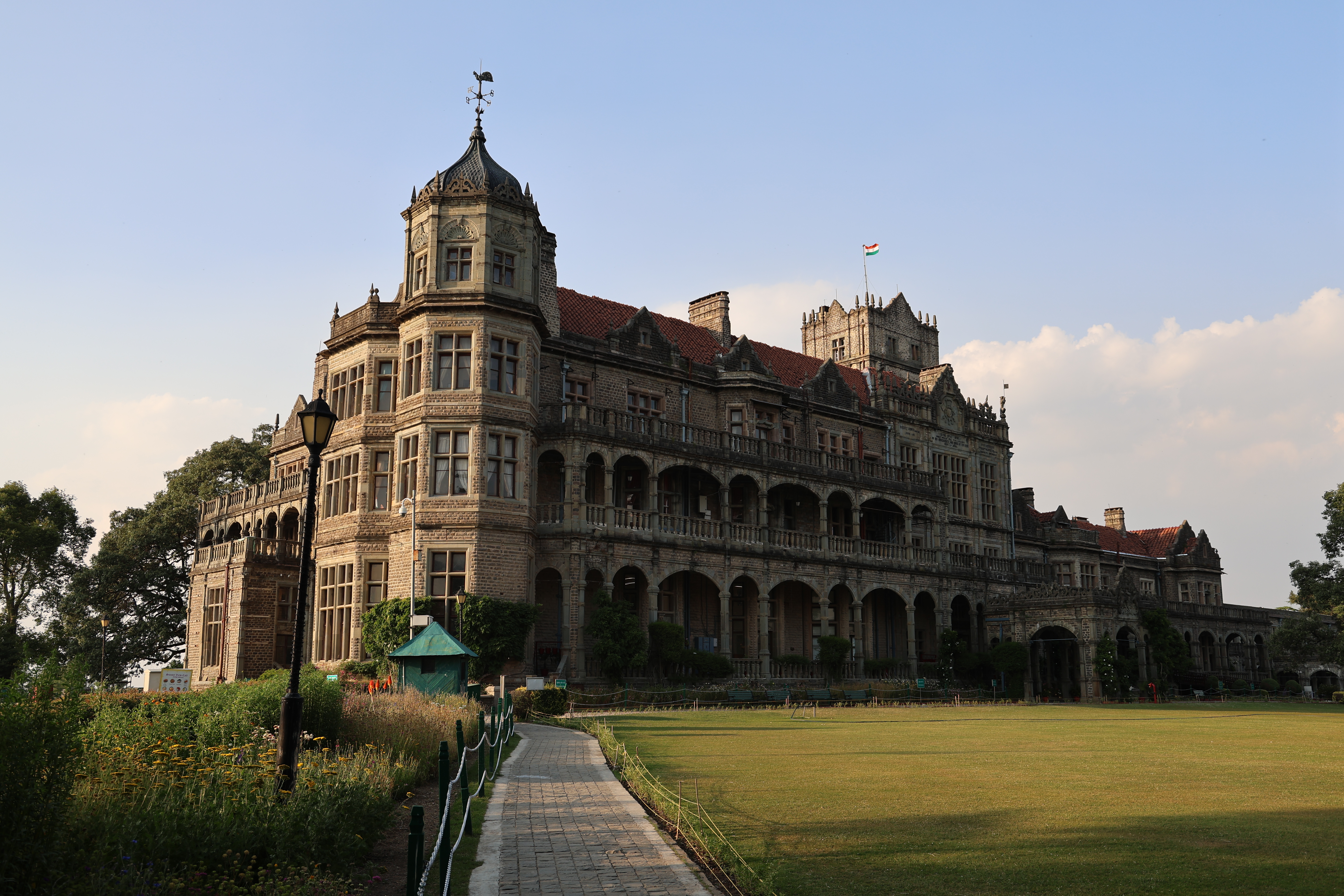
The Vice regal Lodge or presently known as Indian Institute of Advanced Study is a cultural heritage in Shimla. Still the largest in size and marvelous in beauty compared to British time, this Scottish structure was built under the vice royalty of Lord Dufferin between 1884 to 1888. It remained in use as the Viceregal Lodge till the Indian independence and later was handed over to Indian Government when it became the Presidential palace. In 1965 it was taken over by the Ministry of Education(Shiksha Mantralaya), who established the Indian Institute of Advanced Study here. The building has been the seat of the imperial government from 1888 to 1947. Before the Indian partition many important conferences and meetings took place in this building leading to the Independence. Shimla Conference in 1945 and Shimla Cabinet Mission in 1946 were the landmark meetings held in this house. A few parts of the building are open for public and tourists to visit. Kindly note the following instructions to make your trip memorable.
Location
The building is located at the Western end of the ridge, Shimla that is 3.5 kilometers from the main square. From the main entrance to the building near the parking lot, a gradual climb nearly 300 meters takes you to the top of Observatory Hill that is crowned by the lovely edifice. You are allowed to take your vehicle near the Main Building by paying a nominal fee of Rs. 10/- per vehicle per round. But you are not allowed to park the vehicle near the building due to lack of space. So your driver must bring the vehicle back to the main parking lot. When the tour is over you may call your driver to come up to pick you or you may choose to walk down the hill to the parking lot.
Eco-Friendly Golf Cart Facility
To enhance visitor convenience and promote environmentally sustainable mobility within its historic campus, the Indian Institute of Advanced Study (IIAS), Shimla, has introduced an eco-friendly Golf Cart Facility for tourists. The service has been designed to provide comfortable transportation between the Main Gate and the Ticket Booth, as well as for the return journey from the Ticket Booth to the Main Gate.
The facility is particularly beneficial for senior citizens, differently-abled visitors, families with children, and those who may find it difficult to traverse the distance on foot. The battery-operated carts offer a smooth, safe, and convenient mode of transportation while preserving the peaceful and pollution-free atmosphere of the campus.
As part of the Institute’s commitment to sustainable tourism and green initiatives, the golf carts operate on clean energy and contribute to reducing dependence on conventional fuel-based transportation. The initiative aligns with broader efforts to encourage environmentally responsible visitor services within heritage and educational institutions.
The service is available to all visitors at a nominal charge of ₹10 per person per ride, making it both affordable and accessible. By combining visitor comfort with environmental responsibility, the Golf Cart Facility contributes to a more inclusive, enjoyable, and sustainable experience for all those visiting the iconic Rashtrapati Niwas campus of IIAS.
Tours Inside :
-> Please maintain social distancing in the premises of IIAS.
-> The Institute remains open for the tourists from 9:30 am to 5:00 pm (National holidays and Monday closed).
-> Guided tours are conducted for the tourists to understand the historic relevance of the building. The tickets for the guided tour (Inside ) are categorized into various slots, will be issued on a first come first serve basis.
-> The first tour usually begins around 10:30 AM and the last tour at 4:30 PM. Guided / printed tour time once missed will not be adjusted in any case in next guided tour.
-> In one group maximum 60 Pax are allowed.
-> Duration of the guided tour is 30 minutes.
-> All the tours are conducted by professional guides who have a thorough knowledge of the historical background of the building.
-> All tours are conducted in both the languages – Hindi and English.
-> Lunch break timings will be either from 1 to 1:30 or 1:30 to 2 PM.

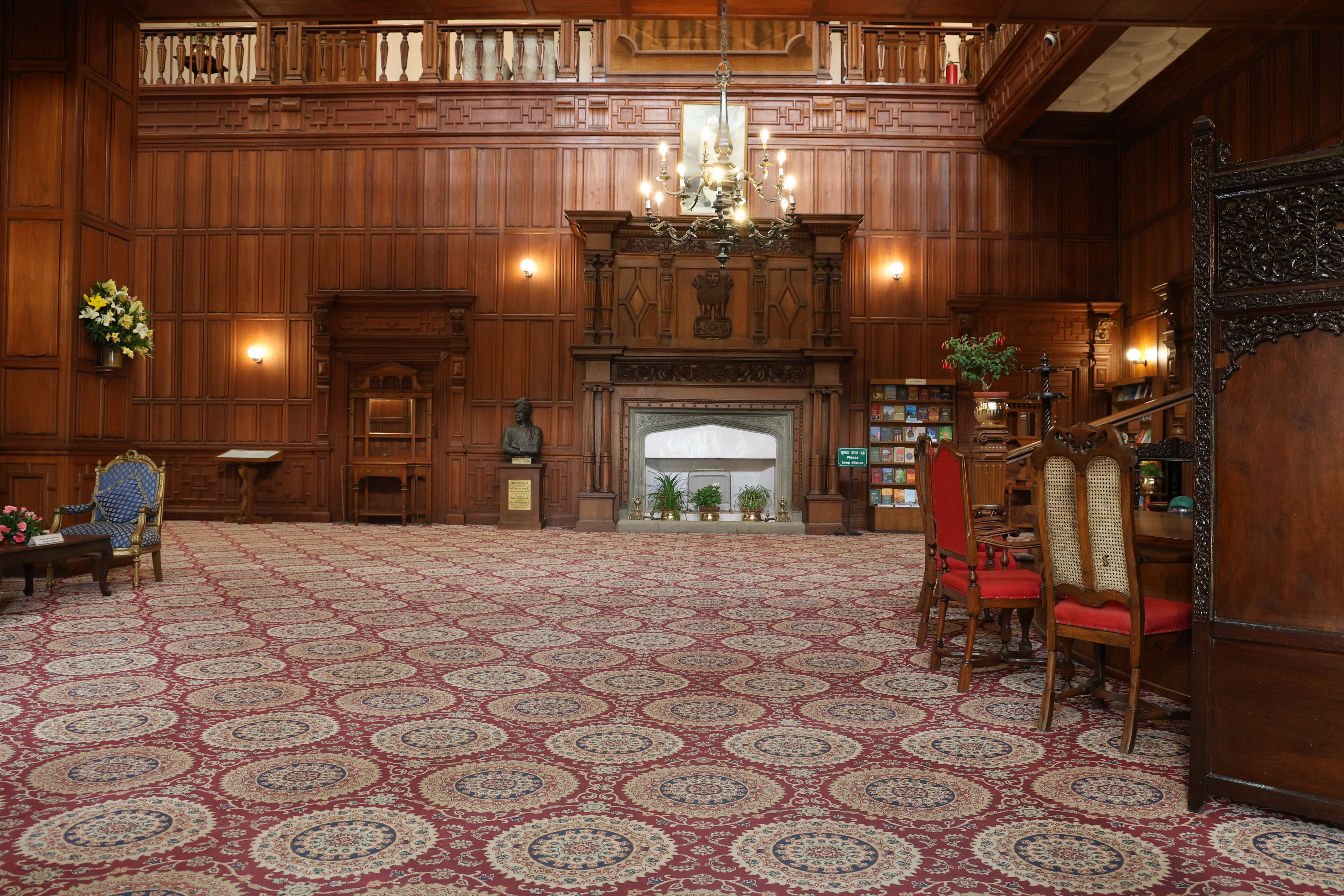

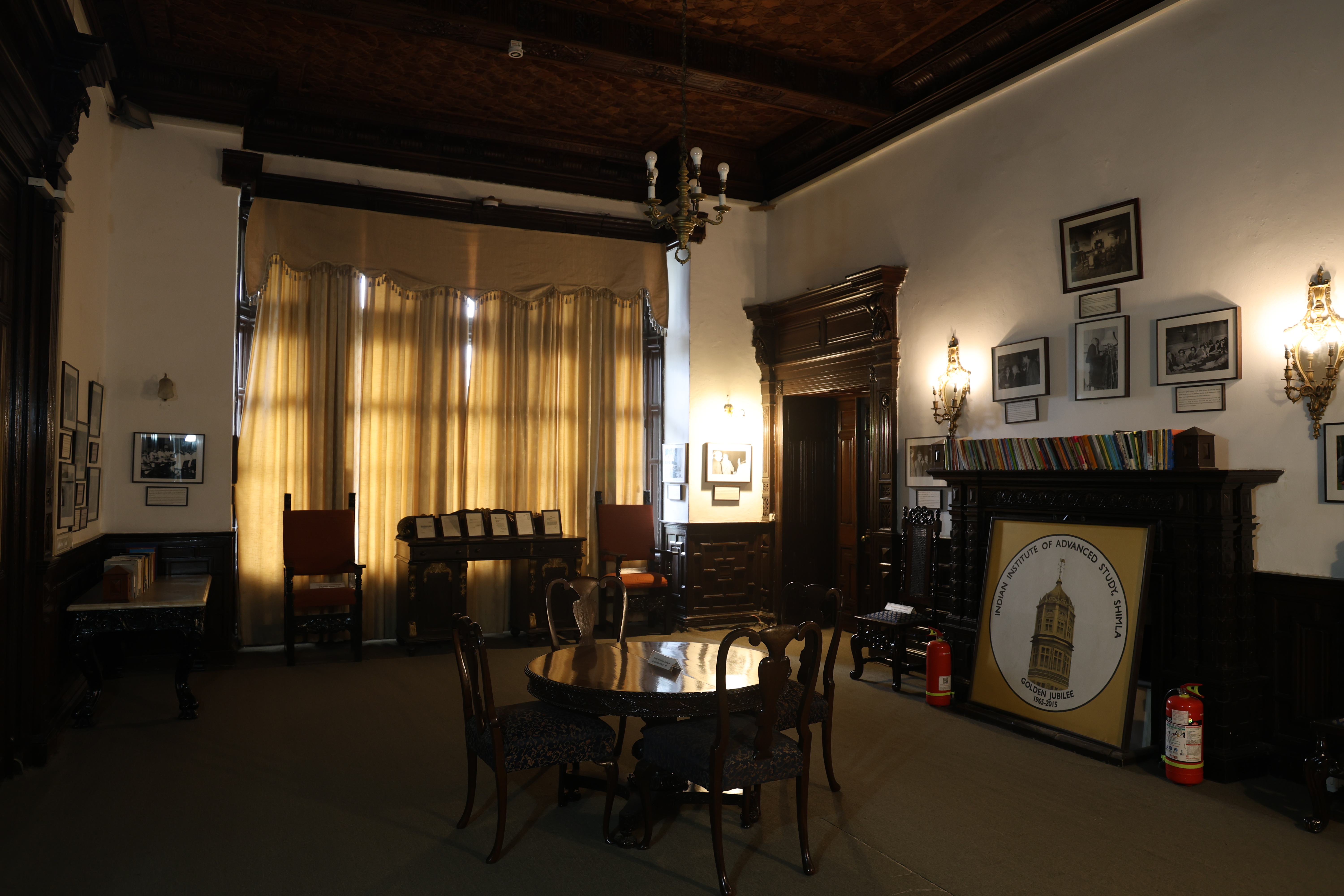
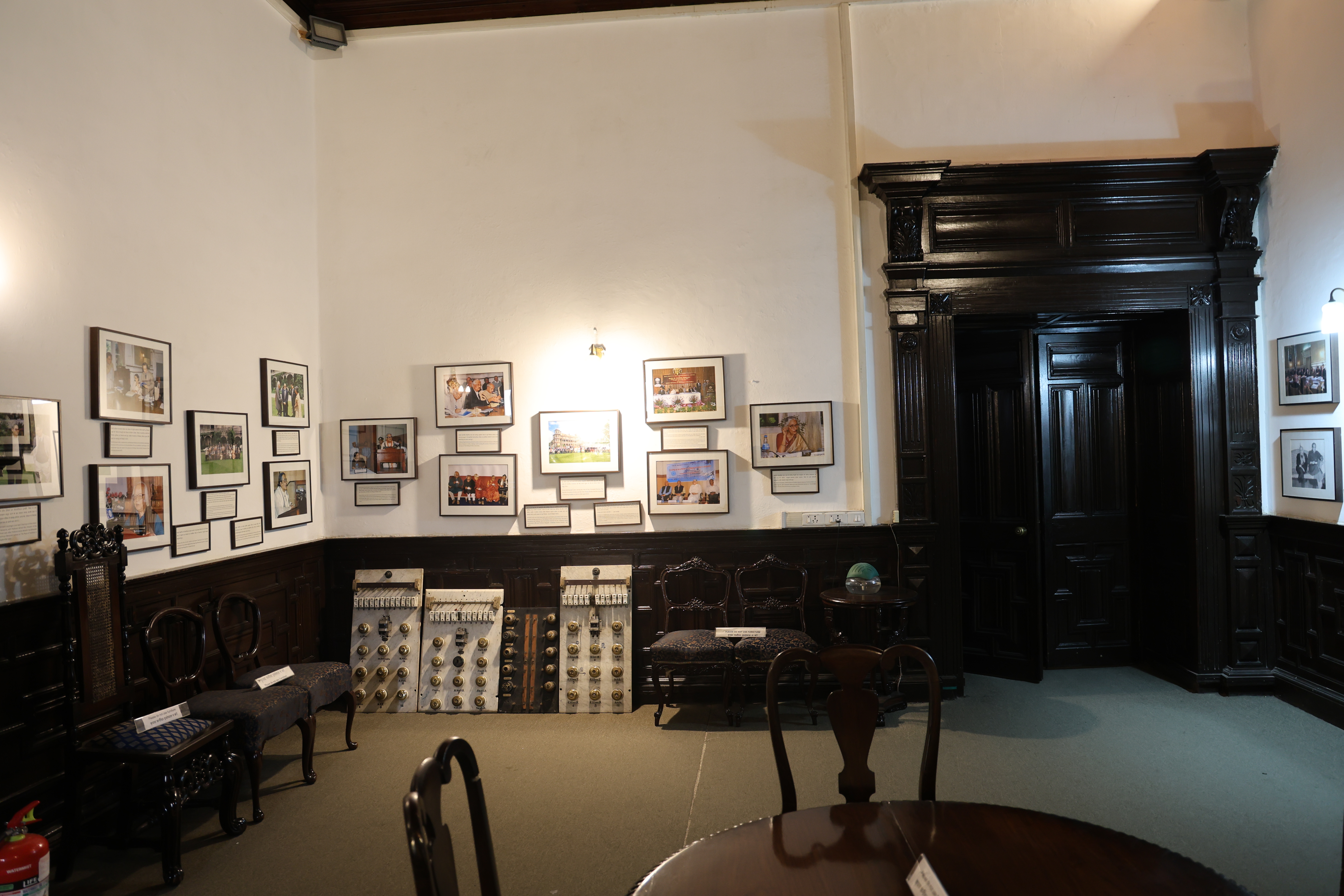
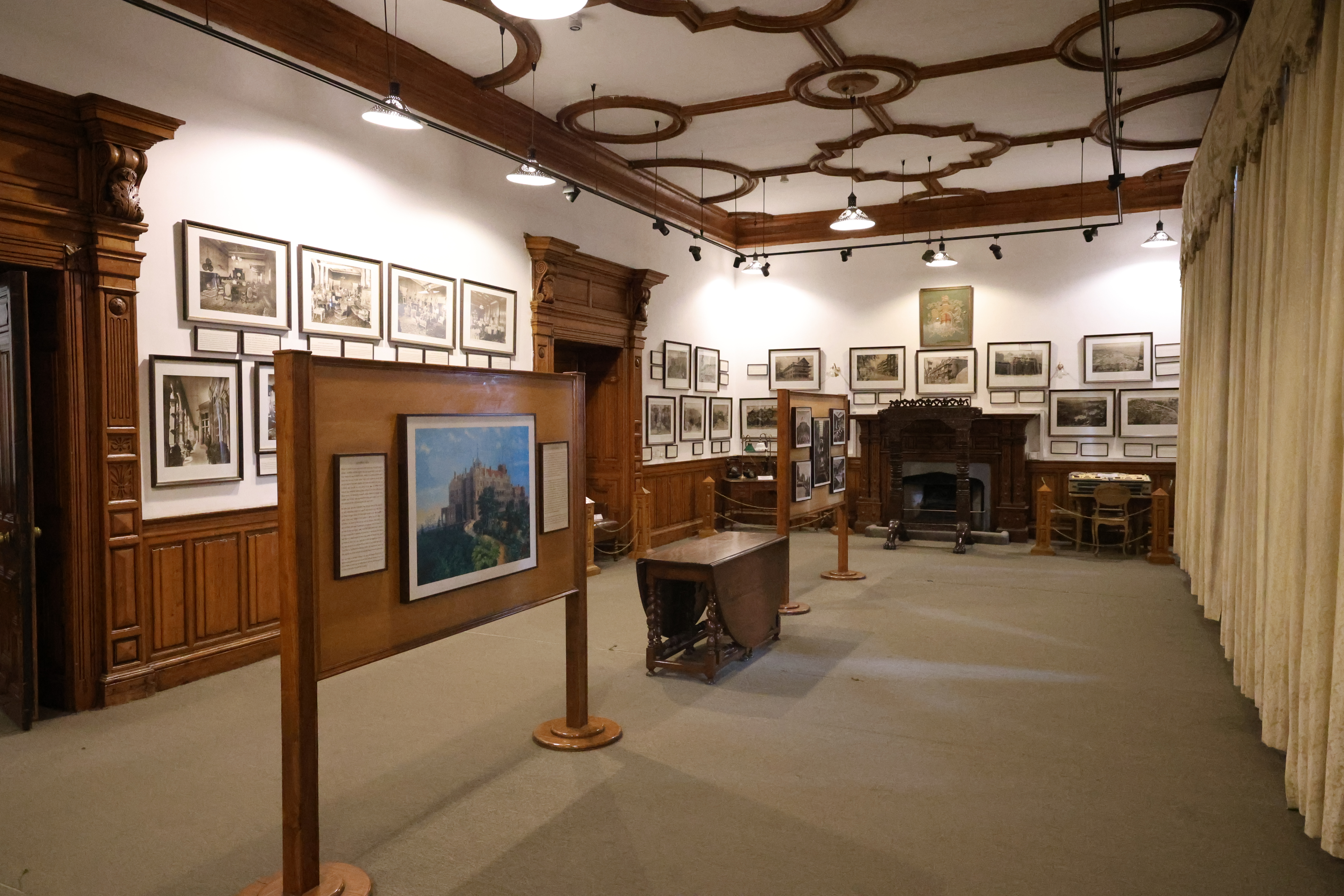
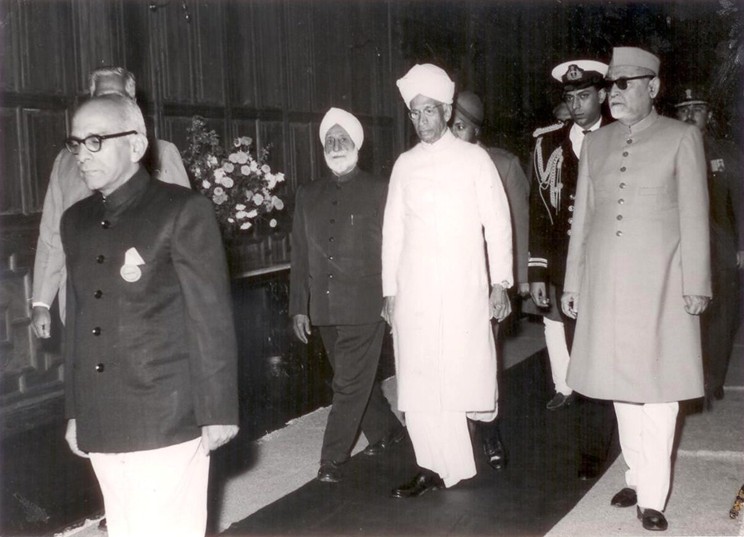
Dr. Sarvepalli Radhakrishnan, President of India, at the inauguration of the Indian Institute of Advanced Study, Shimla on 20 October 1965. He is seen here walking in the Central Hall of the main building along with Dr. Zakir Husain, Vice President of India (extreme right).
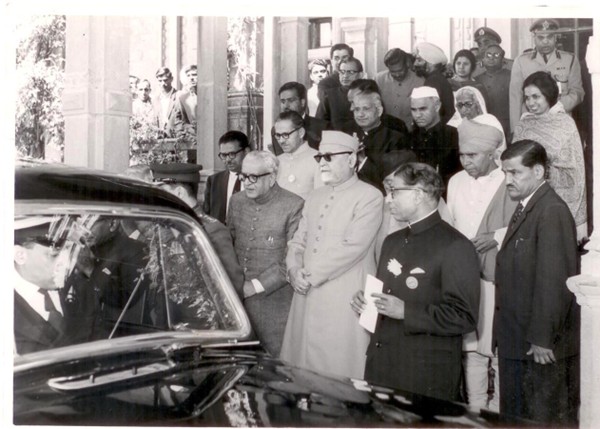
Shri M. C. Chagla, Union Education Mininster; Dr. Zakir Hussain, Vice-President of India; and Professor Niharranjan Ray, first Director of the Institute (First row: left, centre and right respectively) seeing-off the President of India at the main porch of the Rashtrapati Nivas, Shimla after the inauguration of the Indian Institute of Advanced Study on 20 October 1965.
Gallery No. 2
This building was the venue of two momentous events that signalled the end of British rule in India. At the end of the Second World War (the war ended in Europe in May 1945) the British Indian government invited nationalist leaders and representatives of some other political groups in India for negotiations on new constitutional arrangements.
Independence for India was now officially on the agenda. These talks commenced on 25 June 1945, and were held at Shimla (they are generally referred to as the Shimla Conference). Archibald Wavell, the governor-general, presided over the Conference.
Although Gandhiji did not participate in the Conference, he was present in Shimla on this occasion for informal discussions and to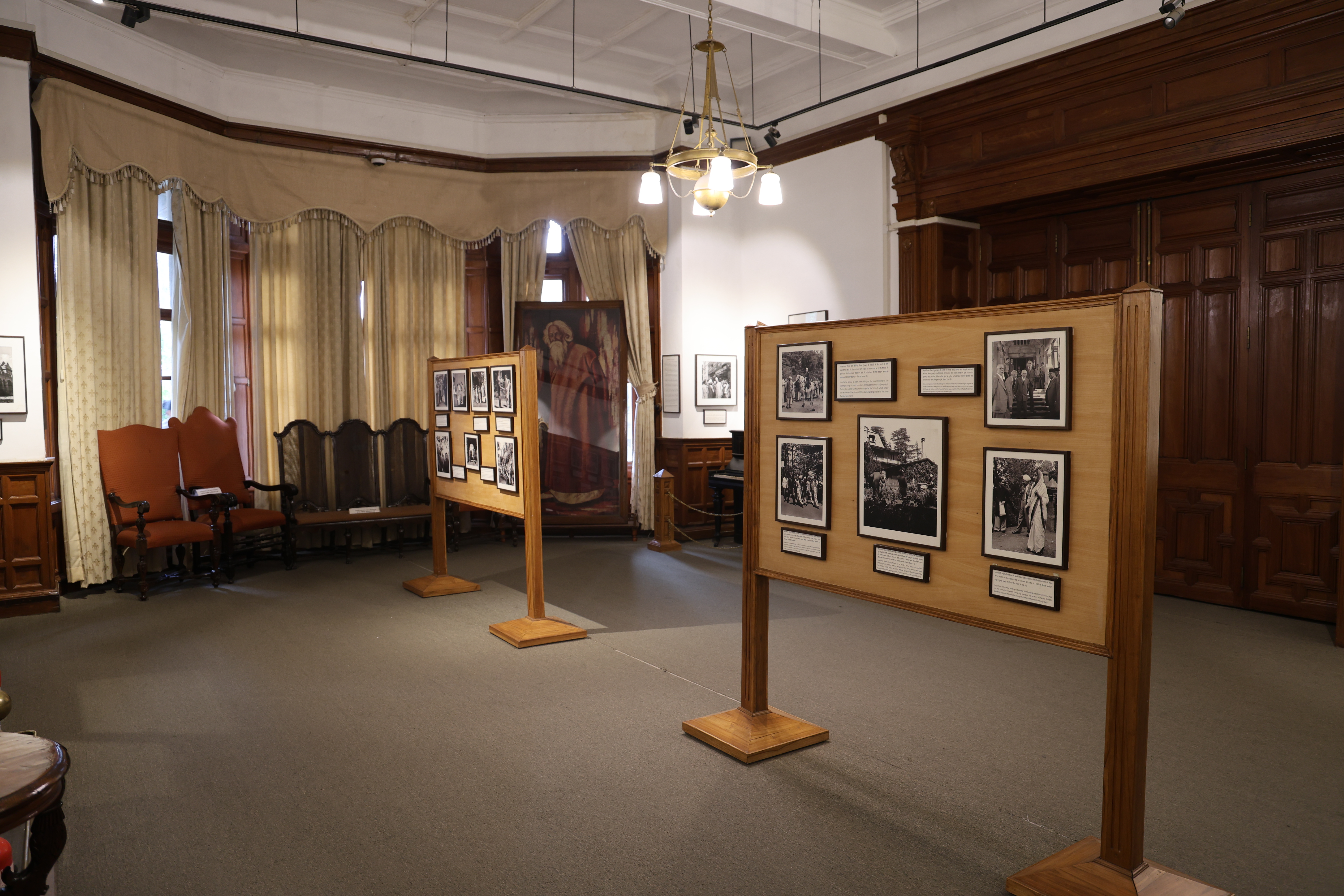 assist the leaders of the Indian National Congress.
The negotiations were not successful.
In July 1945 a new government was formed in Britain, with Clement Attlee (of the Labour Party) as Prime Minister. The Attlee government sent three senior cabinet members for further negotiations on the question of Indian independence. The delegation, usually referred to as the Cabinet Mission, arrived in India in the last week of March 1946. At the beginning of May 1946 the Cabinet Mission reached Shimla to continue consultations with Indian leaders. These consultations were held in this building, and were of great significance in giving shape to the independent Indian state that came into existence on 15 August 1947.
Tagore Gallery
The Tagore Gallery at the Indian Institute of Advanced Study (IIAS), Shimla, inaugurated on 6 March 2026, has been established as a dedicated cultural and educational space celebrating the life, works, and enduring legacy of Gurudev Rabindranath Tagore. Developed under the mandate of the Tagore Centre at IIAS, the gallery seeks to bring the ideas of one of India’s greatest thinkers, poets, philosophers, and Nobel Laureates closer to visitors from across the country and abroad.

Through carefully curated exhibits, archival material, interpretive panels, photographs, and thematic displays, the gallery presents various facets of Tagore’s intellectual journey, literary achievements, educational philosophy, and vision of cultural dialogue. Special attention has been given to making the content accessible to students, researchers, tourists, and general visitors alike.
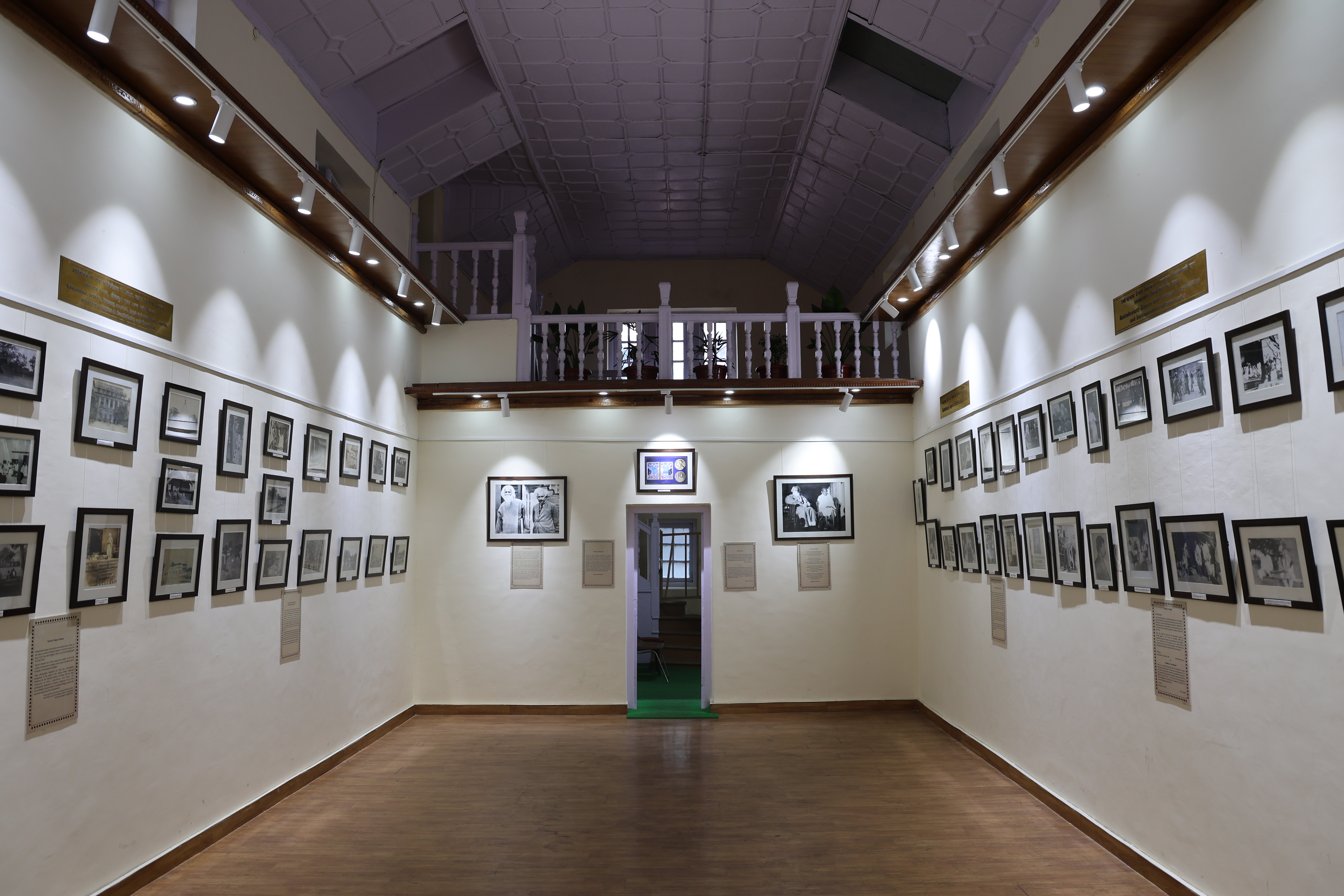
The gallery also highlights the continuing relevance of Tagore’s ideas in contemporary society and reflects the broader objectives of the Tagore Centre, which aims to promote interdisciplinary scholarship, cultural understanding, and public engagement with India’s intellectual heritage.
Situated within the historic campus of the former Viceregal Lodge, the Tagore Gallery adds a significant new dimension to the visitor experience. It offers an opportunity to engage with the life and thought of a global literary icon while exploring one of India’s premier institutions of advanced research and learning.
Fire Station Gallery and Wall of Fame
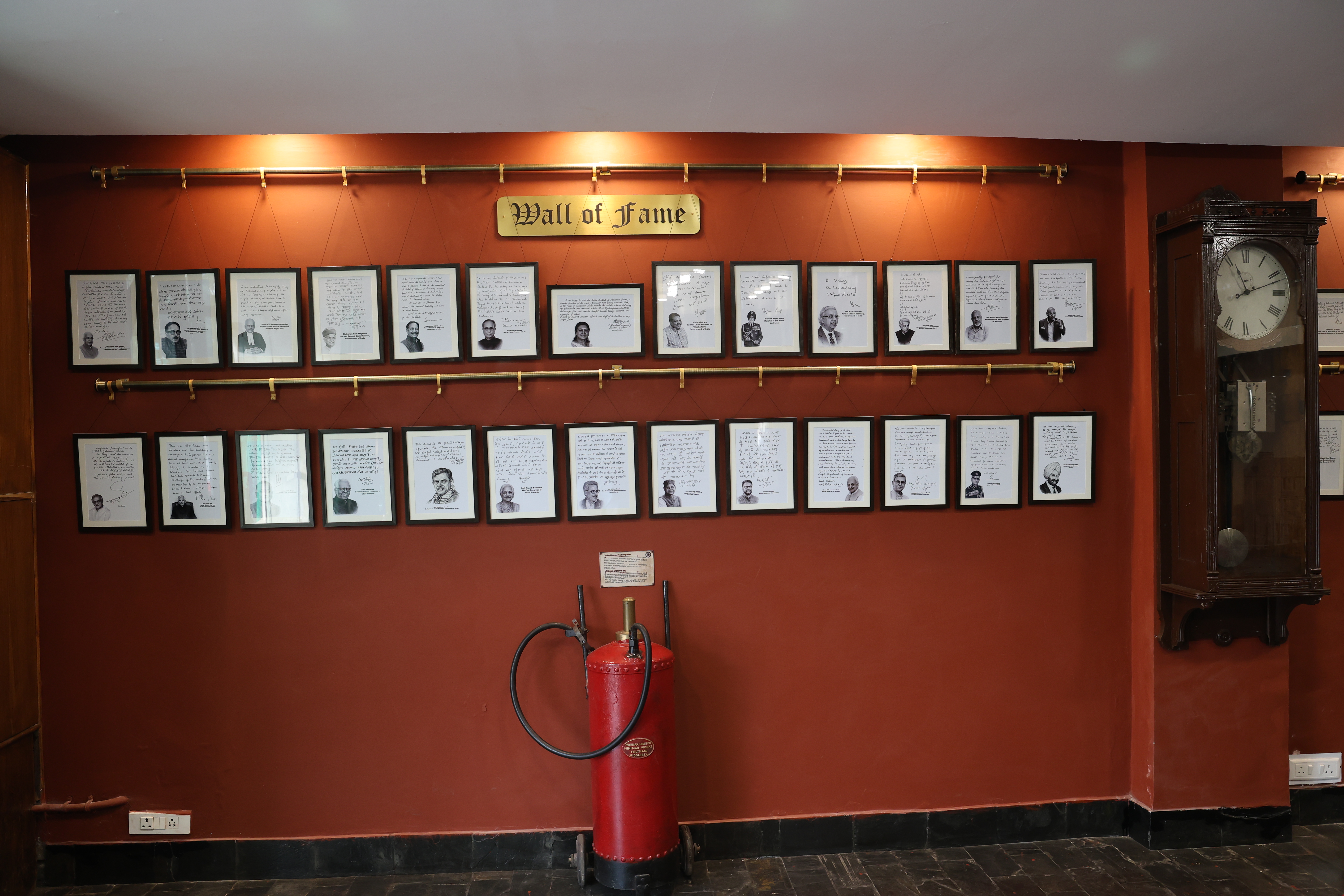
The Fire Station Gallery and Wall of Fame at the Indian Institute of Advanced Study (IIAS), Shimla, represent a unique initiative aimed at combining public education, institutional heritage, and visitor engagement. Developed within the historic campus of the Institute, the gallery showcases a collection of traditional fire-fighting equipment, historical safety apparatus, and interpretive exhibits that illustrate the evolution of fire protection and emergency response systems over time.
The gallery has been designed to create awareness among tourists, students, and the general public regarding fire safety, disaster preparedness, and the importance of safeguarding heritage structures. Informative displays provide visitors with insights into the functioning of historical fire-fighting equipment and the challenges of protecting large institutional and heritage buildings.
Complementing the gallery is the IIAS Wall of Fame, which celebrates the distinguished national leaders, eminent visitors,and notable personalities who have included their testimonials and remarks in the visitor books of the Institute. Through their comments and entries in our Visitor book, the Wall of Fame offers visitors a glimpse into the rich academic tradition associated with the institution.
Together, these attractions provide an engaging and educational experience, enriching the visitor journey through the campus while highlighting the Institute’s commitment to heritage conservation, public outreach, and knowledge dissemination beyond the academic community.
Entry Fee
| SI. No. | Particulars | Revised Rates |
|---|---|---|
| 1 | Indian Nationals | Rs. 200/- each |
| 2 | Children (6-12) Yrs | Rs. 50/- each |
| 3 | Foreign Nationals (Above 5 Yrs) | Rs. 1000/- each |
| 4 | Lawns & Gardens (Foreign Nationals) | Rs. 100/- each |
| 5 | Lawns & Gardens (Indian Nationals) | Rs. 60/- each |
| 6 | PWD (Persons With Disabilities) | Rs. 50/- each |
| 7 | Students from Private Schools/Educational Institutes( up to graduation level) | Rs. 50/- each |
| 8 | Children up to five years of age. | Exempted |
| 9 | Serving Personnel of Indian Army, Indian Air Force, Indian Navy, and Central Para-Military forces, along with their dependents, will be provided free entry, subject to verification of relevant documents. | Exempted |
| 10 | Students up to Class XII from Government schools will be granted free entry, subject to verification of relevant documents. | Exempted |
| 11 | Note: | These new and revised tariff rates will be effective from 01 March 2026. Tickets once sold will not be refunded or adjusted in next guided tours. |
Vehicle Entry Fee and Parking Charges
| SI. No. | Category of Vehicle | Parking at Gorkha Gare (0-2 Hours) Rs. | Parking along with Pick and Drop (Rs.) | Only Pick and Drop Charges (Rs.) |
|---|---|---|---|---|
| 1 | LMV/Car | 40 | 60 | 20 |
| 2 | SUV | 50 | 70 | 30 |
| 3 | Tempo Traveller/More than 10 seater | 80 | 100 | 20 |
| 4 | Mini Bus etc | 80 | 100 | 20 |
Your Guide
-> Your guide is the most important part of your trip inside. He/She keeps a complete knowledge of the building, its history and events. So kindly listen to them carefully and ask them question if any.
-> Kindly listen to your guide carefully and follow their instructions.
The Displays
-> Do not damage the furniture, fixtures, photographs, paintings, decoration-pieces and antiques inside the building as they are only for display and not for use.
-> The furniture, carpets, chandeliers, curtains are as old as the building are part of our Heritage. Kindly respect them.
The Security Guard
-> A security guard is also a part of the tour as he maintains the discipline to uphold the area of the building. He would be the last person to leave the room. In case you want to spend more time in the room, kindly inform your security guard.
Walking on the Lawns
-> The building is surrounded by the beautiful lawns. Beneath the front lawn a rain water harvesting tank has been built, so walking on the lawn is not allowed. Kindly use the pathway to enjoy the view of the building. The South West corner near the Tulip tree is the best place to capture pictures with the background of the building as a whole.
-> At the back of the building there are some lawns. Kindly avoid walking on the grass as it damages the beauty of the lawns.
Photography
-> Though you can capture the beauty of the monument from outside and frame lifelong memories. But photography inside the building is not allowed.
-> At the ticket counter lovely post cards are available for sale with the photos of the building. You may select them as souvenirs to add to the memories of your visit.
-> Any kind of commercial videography and commercial photo shoot is restricted in the premises of the Institute without the prior permission of the authorities of the Institute.
-> Flying any kind of remote operated devices such as Drones and toys is strictly prohibited within the campus premises.
-> Photography is strictly prohibited inside the main building.
Smoking
-> Smoking is strictly prohibited in the Institute.Visitors are requested comply with the rules and not to violate them. Anyone found smoking shall be fined with Rs. 500.
Littering around
-> Shimla is very neat and clean town. The administration manages the town and emphasizes on maintaining cleanliness. So please do not litter around.
-> Dustbins have been installed by the administration of the Institute in various places. Please make use of them.
-> Do not throw any empty packets, plastic wrappers, peal offs, plastic bottles or any other garbage on the road, down the hills or in the forests. Keep it with you till you find a dustbin and then dispose the waste.
Picnics
-> Picnics are not allowed on the premises of the Institute.
-> Eatables are not allowed within the complex.No camping is allowed in the forests around the building.
Sunset View Café
Nestled within the serene and historic campus of the Indian Institute of Advanced Study (IIAS), Shimla, the Sunset View Café offers visitors a unique opportunity to relax and enjoy refreshments amidst one of the most picturesque settings in the Himalayas. Strategically located at a vantage point overlooking the surrounding valleys and mountain ranges, the café has been developed as a visitor-centric amenity that complements the heritage and natural beauty of the Rashtrapati Niwas campus.
The café provides a welcoming space for tourists, scholars, students, and families to unwind during their visit while taking in panoramic views of the sunset and the scenic landscape for which Shimla is renowned. Designed to blend harmoniously with the environment, the facility enhances the overall visitor experience without disturbing the tranquility and academic character of the Institute.
In addition to offering quality refreshments, the café encourages visitors to spend more time exploring the campus and its various attractions, including the Viceregal Lodge, Tagore Gallery, Fire Station Gallery, Wall of Fame, and other heritage features. The initiative forms part of the Institute’s broader efforts to improve visitor amenities, promote responsible heritage tourism, and create meaningful engagement with one of India’s most iconic academic and historical landmarks.
The Sunset View Café has quickly emerged as a popular attraction, providing a memorable combination of heritage, hospitality, and natural beauty within the historic precincts of IIAS.
Garden and Nursery

The Institute boasts a beautiful and expansive garden featuring a rich variety of flora, making it one of the finest landscaped gardens at such a high altitude. The gardens are sustainably maintained throughout the year using rainwater harvested from the roofs of the estate’s prominent buildings. Three nurseries within the garden cater to its horticultural needs and nurture several rare Himalayan plant species.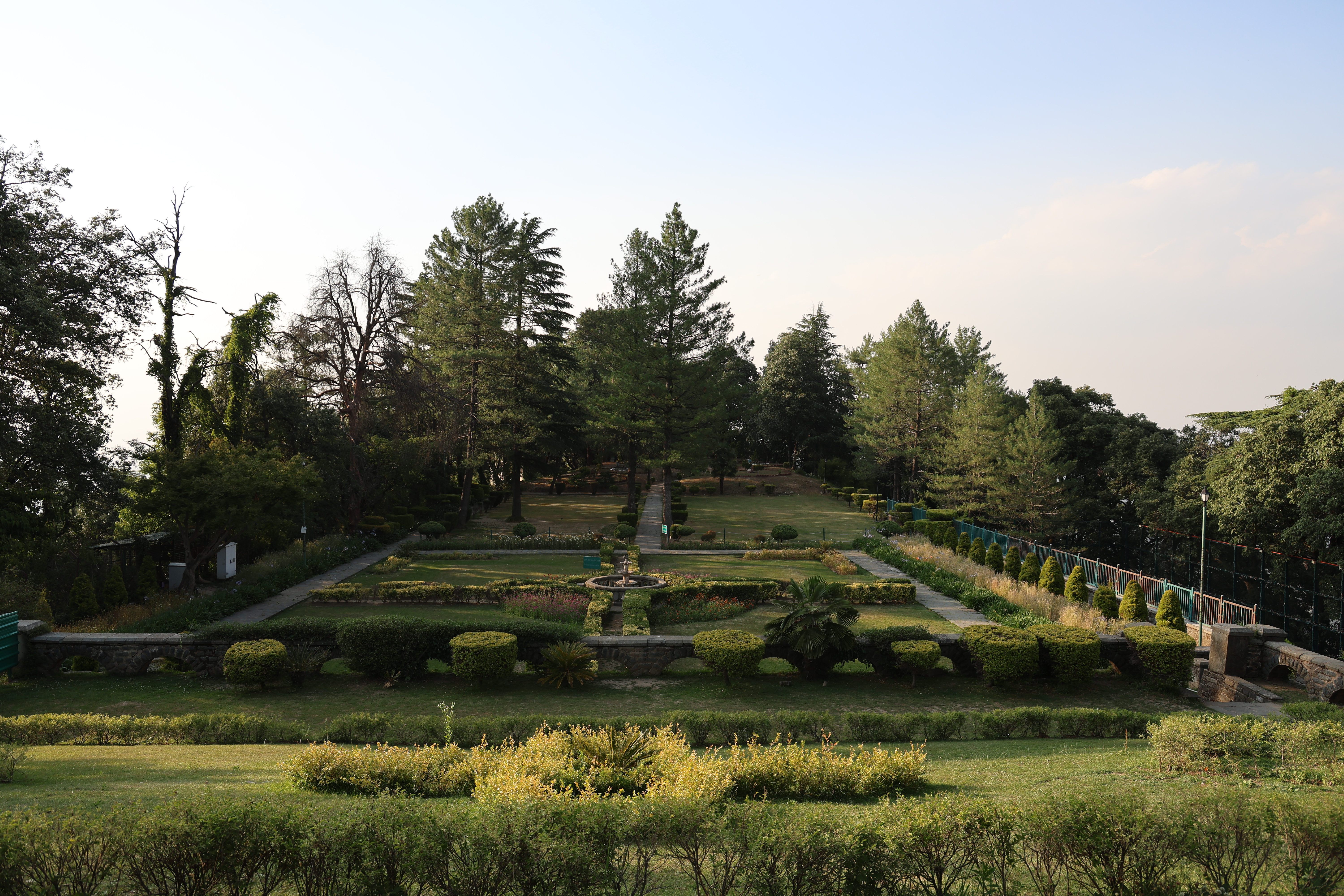
Recognised as one of the most beautiful and well-maintained gardens in the region, the Institute’s garden is a source of pride and admiration. For gardening enthusiasts, the nurseries also offer saplings for sale.
Behind the Main Building are three historic terrace gardens, each with its own distinctive character:
The First Terrace Garden features a magnificent old Himalayan oak tree, two majestic chinar trees, and a sundial that serves as its main attraction.
The Second Terrace Garden, designed by Lady Minto, is notable for its unique layout depicting a skeletal map of the Himalayan mountain ranges.
The Third Terrace Garden is surrounded by vibrant flowers, mature trees, and an old fountain that adds to its charm and serenity.
At the far end of the gardens stands a heritage Sticky tennis court, built in 1888. This historic facility has since been developed into the Institute’s Sports Complex, preserving its legacy while continuing to serve the recreational needs of the campus community.
Safety and Security
-> The building is safely guarded by the guards so kindly cooperate with them. It is always in your favour to listen to them and follow the instructions.
-> Do not climb on the wall or damage the plants.
-> Do not damage to the balustrades, retaining walls, trees or any part of the building. Anyone found doing so shall be suitably punished.
-> Arms, ammunitions,knives,smoking items, tobacco products, and liquor are strictly prohibited.
->In case of any accident of mishap please contact the security guard or any other staff member of the Institute so that the medical facility can be arranged.
Toilets and Washrooms
-> There are no toilets and washrooms inside the building for the visitors, but near the ticket counter there are separate washrooms for ladies and gents.
-> Sometime the toilets may be under maintenance, so kindly consult the person sitting on the ticket counter for the alternate.
At Last
-> Please maintain silence and strictly follow the rules.
-> Do not damage, remove or destroy historic sites or monuments, or any artifacts associated with them. Avoid touching and scratching the walls and surfaces of the monument as these are heritage sites and need special care.
-> Parking facility is not provided to the tourists inside the main gate of the Institute.
-> Take Nothing But Photographs – Leave Nothing But Footprints is the rule that applies to every tourist and so it applies on you too. Kindly follow it.
->Students studying in Government schools of Himachal Pradesh coming in groups and carrying authority letter from the school will be exempted from entry fee.